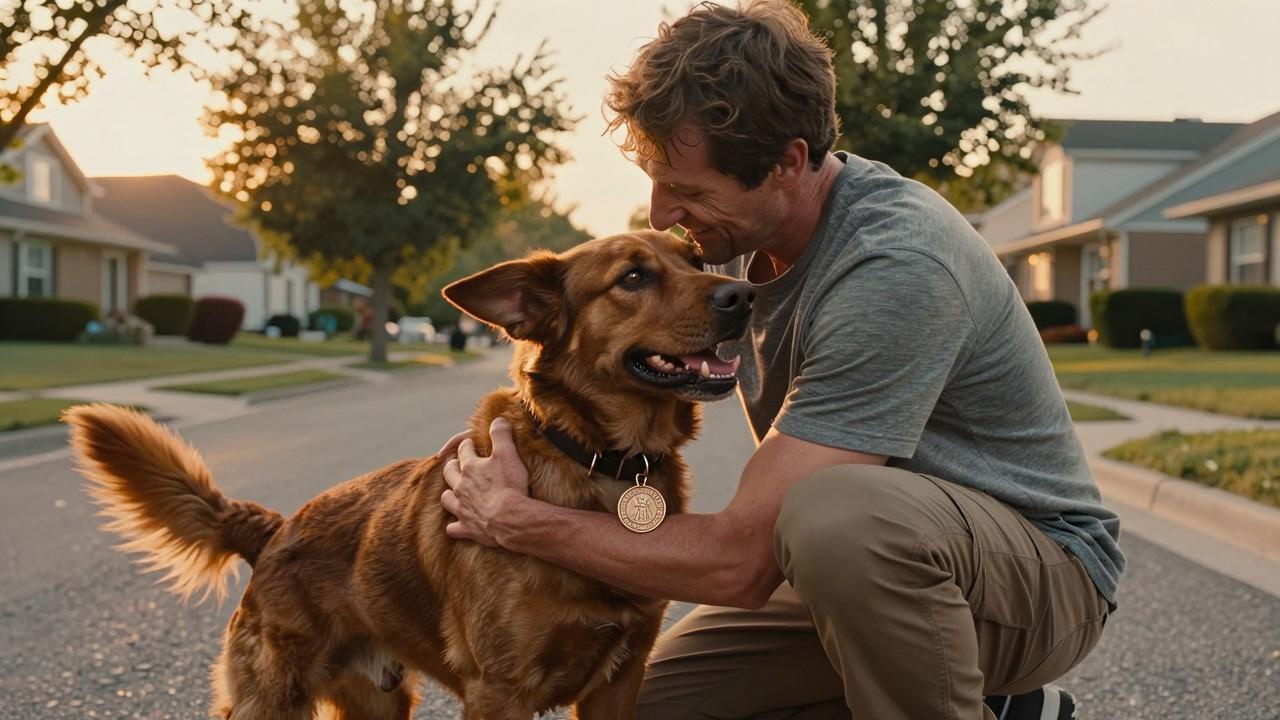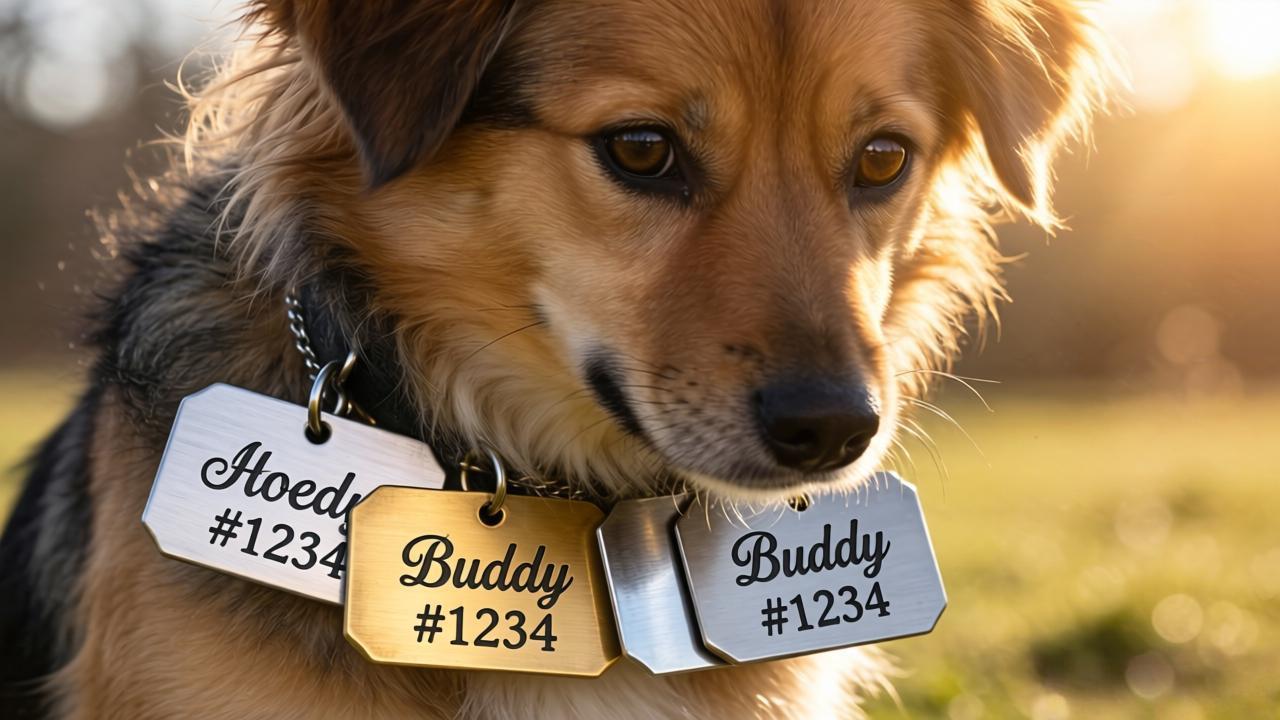

Dog ID tags may be small, but they serve one of the most important purposes in your dog’s daily life. If a curious puppy slips out of the yard or an older dog becomes separated during a walk, a simple tag with clear contact information can make the difference between a stressful search and a quick reunion.
When shopping for a personalized dog tag, you’ll quickly notice two common customization methods: engraved dog tags and printed dog tags. At first glance they may look similar, especially in online photos, but the way the information is added to the tag has a significant impact on durability, readability, and long-term reliability.
I’ve purchased several personalized tags over the years for my own dogs as well as for family members. One thing became obvious after months of everyday use: the appearance of a tag on the day it arrives isn’t nearly as important as how it looks after hundreds of walks, rainy afternoons, trips to the dog park, and countless hours of jingling against a collar.
If you’re wondering whether laser engraved dog tags are worth choosing over printed ones, here’s a closer look at how they compare in real-life situations.

The biggest difference lies in how your dog’s information becomes part of the tag.
An engraved dog tag permanently removes a tiny amount of material from the surface using a precision laser or mechanical engraving tool. Instead of placing ink on top of the metal, the letters are physically cut into it. Depending on the material, the engraved areas may appear darker because of oxidation or laser marking, creating strong contrast that’s easy to read.
A printed dog tag works differently. The text is applied to the surface using printing, UV printing, sublimation, or similar methods. This allows colorful graphics, logos, cartoon artwork, and vibrant designs that aren’t possible with traditional engraving.
Both methods have their place, but they’re designed with different priorities. Printing focuses on appearance and design flexibility, while engraving focuses on long-term identification.
Laser engraving remains readable long after daily wear begins.
A dog tag experiences far more abuse than most people expect. It constantly rubs against collar hardware, harness buckles, leash clips, and sometimes another identification tag. Every jump into the car, roll across the grass, or playful wrestling session adds a little more wear.
Because engraved text sits below the surface instead of on top of it, normal scratching usually doesn’t remove the information. Even if the front of the tag develops small cosmetic scratches, the engraved letters often remain surprisingly clear.
Printed designs, however, depend on a surface coating. While many modern printing methods are much more durable than older techniques, repeated friction eventually wears away some printed areas. Dogs that enjoy swimming, hiking, beach trips, or rough outdoor adventures may accelerate this process.
This difference becomes especially important if the tag contains your phone number. Decorative artwork fading over time isn’t a major issue, but contact information should remain readable throughout the life of the tag.
Busy outdoor adventures highlight one of engraving’s biggest advantages.
One weekend, I joined a friend on a long hiking trail with our dogs. Between muddy paths, shallow streams, and plenty of running through bushes, both dogs looked completely different by the end of the afternoon than they had at the trailhead.
While cleaning everything afterward, I noticed something interesting. The laser engraved stainless steel tag still looked almost exactly the same. There were a few light scratches across the polished surface, but every letter remained crisp and easy to read. Experiences like that helped me appreciate why many active dog owners continue choosing engraved tags, especially for dogs that spend a lot of time outdoors.
Clear identification matters most when someone else needs to read the tag quickly.
Imagine a friendly stranger finds your dog wandering through a neighborhood or local park. They don’t know your dog’s name, your address, or your routine—they only have whatever information is printed or engraved on the tag.
In that moment, readability becomes far more important than appearance.
Deep laser engraving generally produces clean, high-contrast lettering that remains legible even after months or years of everyday use. If the tag has collected a little dirt or a few scratches, wiping it with a cloth is often enough to reveal the engraved text again.
Printed tags can certainly look beautiful when they’re brand new, especially if they include colorful backgrounds or custom artwork. However, if the printed layer begins to wear in areas where the phone number or owner’s name appears, reading that information quickly may become more difficult.
For identification products, durability isn’t simply about making the tag last longer—it’s about ensuring the information is still there when it’s needed most.
Printed dog tags offer more artistic freedom, while engraved tags prioritize function.
One advantage of printed dog tags is the ability to create highly customized designs. You can include colorful illustrations, paw prints, holiday themes, cartoon portraits, camouflage patterns, or even full-color photographs of your pet. For owners who see their dog’s accessories as part of their personality, printed tags can be a fun choice.
Laser engraving is more limited from a decorative standpoint, but that’s partly why it has remained popular for decades. Most engraved tags focus on clean typography, simple icons, and essential information rather than elaborate graphics.
Personally, I tend to think of these two options the same way I think about outdoor equipment. Something designed for everyday reliability often looks simpler than something designed primarily for decoration, and that’s perfectly fine when practicality comes first.
Material quality often matters just as much as the engraving itself.
Whether a tag is engraved or printed, the material underneath plays an important role in its overall lifespan.
Stainless steel is widely considered one of the best materials for engraved dog tags because it resists rust, handles moisture well, and maintains its appearance after years of regular use. It’s an excellent choice for dogs that love hiking, swimming, camping, or simply spending time outdoors.
Aluminum tags are lightweight and comfortable for small breeds and puppies. They’re often more affordable and available in many colors, although they tend to scratch more easily than stainless steel over time.
Brass develops a distinctive aged patina that many owners appreciate, while titanium offers exceptional durability with minimal weight, although it usually comes at a higher price.
In my experience, combining laser engraving with stainless steel creates one of the most dependable combinations for everyday identification because both the material and the engraving method are built to withstand years of wear.
Laser engraved tags are especially valuable for active dogs.
Not every dog lives the same lifestyle. A senior companion who spends most days relaxing indoors places very different demands on an ID tag than an energetic Labrador that swims every weekend.
If your dog regularly visits dog parks, hiking trails, beaches, campgrounds, or travels with your family, an engraved tag provides additional peace of mind. These environments expose collars and tags to dirt, sand, rocks, branches, water, and constant movement. Over time, that’s exactly where permanent engraving tends to outperform surface printing.
Many working dogs, service dogs, farm dogs, and hunting dogs also wear engraved identification because reliability is usually more important than decorative appearance. When a dog may spend hours outdoors, owners generally want information that stays readable regardless of weather conditions.
The best choice depends on what you expect your dog’s tag to do.
If your priority is creating a colorful accessory with eye-catching artwork for occasional use, a high-quality printed dog tag can be an enjoyable option. Modern printing technology has improved considerably, and many printed tags look fantastic when they’re new.
If, however, your primary goal is dependable identification that remains easy to read after months or even years of everyday adventures, laser engraving continues to offer clear advantages. Permanently engraved contact information, combined with a durable material such as stainless steel, gives many dog owners confidence that the tag will continue doing its job long after the excitement of buying it has faded.
At the end of the day, a dog ID tag isn’t just another accessory hanging from a collar. It’s one of the simplest pieces of safety equipment your dog can wear. Whether you’re heading to the neighborhood park, taking a weekend road trip, or simply opening the front door for a walk, having clear, permanent identification is something you’ll hopefully never need—but if the unexpected happens, you’ll be glad it’s there.

Related Posts